

Undead Pulse Check
Gauge your team's energy levels and morale with this zombie-themed pulse check that turns a routine temperature reading into an engaging, lighthearted team activity. Using undead metaphors to represent different energy states, this template helps teams quickly share how they're feeling after a sprint or challenging work period without the awkwardness of traditional check-ins.
What Is the Undead Pulse Check?
The Undead Pulse Check is a quick team health assessment tool that uses zombie imagery and humor to help team members express their current energy levels and emotional state. Rather than asking the standard "how are you feeling?" question, this template presents five zombie states ranging from completely drained to energetically enthusiastic, making it easier for team members to honestly share their status in a fun, non-threatening way.
Pulse checks are brief team exercises designed to quickly capture the mood, energy, and well-being of team members. They're particularly valuable for remote teams where it's harder to read body language and emotional cues. By wrapping this check-in with a playful zombie theme, teams can address potentially sensitive topics around burnout and energy levels with humor and creativity.
Benefits & When to Use
Use the Undead Pulse Check at the beginning of retrospectives, during sprint planning, or at the start of any team meeting where understanding the team's current state will help inform the discussion. This template works especially well:
- After intense sprints or releases to gauge how the team is recovering
- At the start of retrospectives to contextualize the team's emotional state
- During periods of high stress when burnout might be a concern
- When you suspect team energy is low but need concrete data
- As a regular Monday or Friday ritual to track energy trends over time
The lighthearted approach helps teams address serious topics like exhaustion and morale without making anyone feel singled out or uncomfortable. The anonymous voting mechanism encourages honest responses, while the zombie theme adds levity to what could otherwise be an awkward conversation.
Understanding the Zombie Energy States
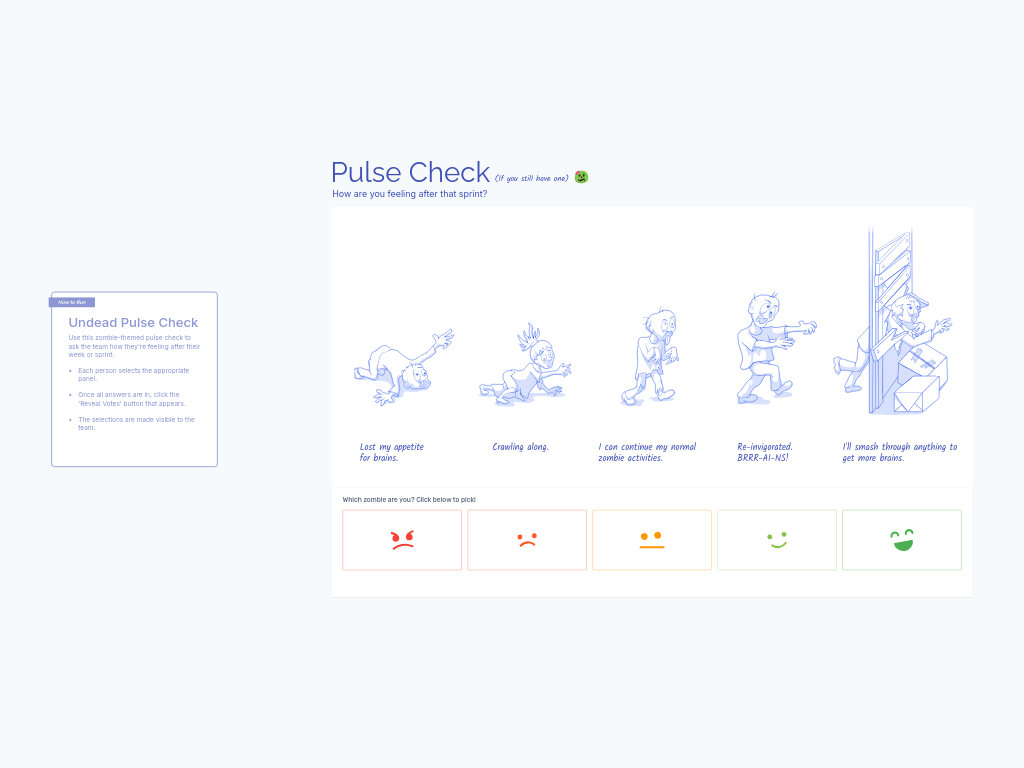
The template presents five distinct zombie states, each representing a different energy level:
Lost my appetite for brains - The lowest energy state, indicating someone is completely drained and has lost motivation. This zombie has given up on their primary purpose.
Crawling along - Moving slowly but still functioning. This represents someone who's struggling but pushing through.
I can continue my normal zombie activities - The middle ground, representing stable energy and the ability to maintain regular work pace.
Re-invigorated. BRRR-AI-NS! - High energy and enthusiasm, indicating someone who's feeling recharged and ready to tackle challenges.
I'll smash through anything to get more brains - The highest energy state, representing someone who's not just energized but actively enthusiastic and ready to break through obstacles.
How to Run an Undead Pulse Check Session
1. Set up the session (1 minute)
Open the template and briefly explain the activity to your team. Let them know they'll be selecting which zombie best represents their current energy level after the sprint or work period. Emphasize that votes will remain hidden until everyone has voted.
2. Private voting (2-3 minutes)
Each team member clicks on the zombie state that best represents how they're feeling. The Voter component keeps selections hidden during this phase, encouraging honest responses without peer influence. Give people a moment to really consider their energy level rather than rushing to vote.
3. Reveal results (30 seconds)
Once everyone has voted, click the "Reveal Votes" button. The selections become visible to the entire team, providing an immediate snapshot of team health and energy distribution.
4. Discuss patterns and outliers (5-10 minutes)
Look at the overall pattern of responses. Are most people energized or drained? Are there outliers who feel very different from the rest of the team? Invite team members to share context if they're comfortable doing so. If someone selected "Lost my appetite for brains," this might indicate they need support or that workload needs rebalancing.
5. Take action (5 minutes)
Based on the results, determine if any immediate actions are needed. If the team shows low energy across the board, consider what adjustments might help—whether that's reducing scope for the next sprint, scheduling some recovery time, or addressing specific blockers causing stress.
Tips for a Successful Session
Create psychological safety first. Before running your first Undead Pulse Check, establish that the purpose is to help the team, not to judge individuals. Make it clear that all responses are valid and that low-energy states are normal parts of sustainable work.
Don't skip the discussion phase. The real value comes from talking about the results, not just collecting data. If everyone votes but you immediately move on to other topics, the team learns that their energy levels don't actually matter.
Watch for trends over time. Run this check regularly and keep track of results. If you notice the team consistently selecting lower-energy zombies, that's a signal that something systemic needs to change. Conversely, if energy improves after implementing changes, you have concrete evidence those changes are working.
Respect privacy while encouraging openness. While votes are revealed to the group, don't pressure anyone to explain their selection. Some team members will naturally want to share context, while others prefer to keep their reasoning private. Both approaches are fine.
Pair with action planning. If the pulse check reveals low team energy, don't just acknowledge it and move on. Block time in the same meeting to identify concrete steps the team can take to improve the situation, whether that's adjusting workload, improving processes, or addressing specific pain points.
Use it as a conversation starter, not a metric. Resist the temptation to track these results as a formal team metric or report them up the management chain. The goal is to facilitate honest conversation within the team, and that honesty disappears when people feel they're being measured.


