

Made for Planning Poker
Why Ludi works well for planning poker
Planning poker works best when teams can estimate independently, discuss differences, and agree on a final estimate without friction. Ludi combines blind voting, story context, and Jira integration in one workspace, so teams can run poker planning sessions without switching tools or managing the process manually.

Blind voting without manual coordination
The built-in template handles private voting and simultaneous reveal automatically, so the facilitator does not need to manage the process manually.

Estimation with full story context
Stories are visible on the board, allowing the team to discuss details, clarify unknowns, and estimate with full context before voting.

No switching between tools
Discussion, estimation, and story clarification all happen in one place, instead of moving between estimation tools, Jira, and whiteboards.

Estimates sync back to Jira
Final estimates are updated in Jira automatically, so there is no need for manual updates after the session.
What is Planning Poker?
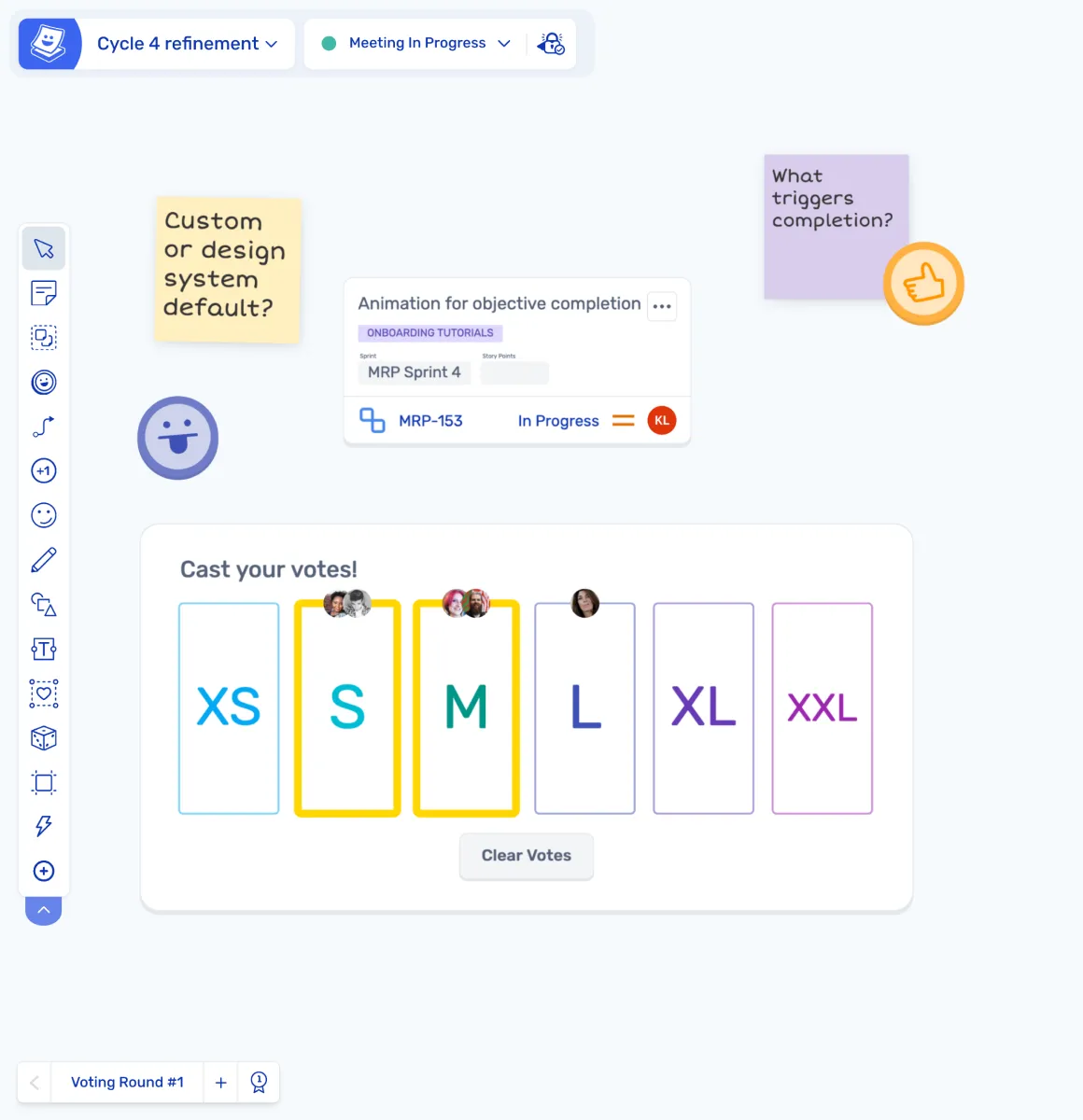
Planning poker is an estimation technique where each team member selects an estimate privately and all estimates are revealed at the same time. This approach prevents anchoring bias, as no one sees other estimates before making their own choice.
If estimates differ significantly, the team discusses the story and re-votes until they reach a shared understanding of the effort required. Planning poker typically uses Fibonacci numbers or T-shirt sizing to estimate relative effort.
How teams run planning poker in Ludi
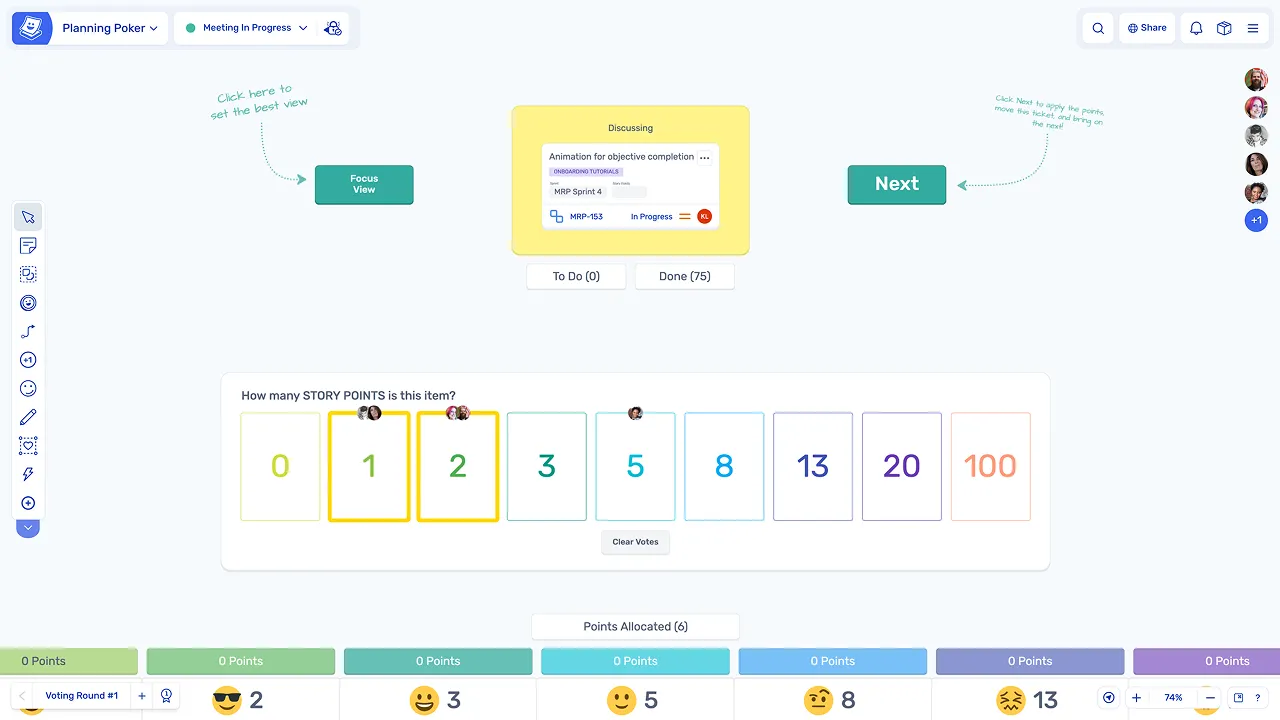
Start with a dedicated template
Teams use the poker planning template, which includes built-in estimation components for blind voting and reveal, so there is no need to set up the session from scratch.
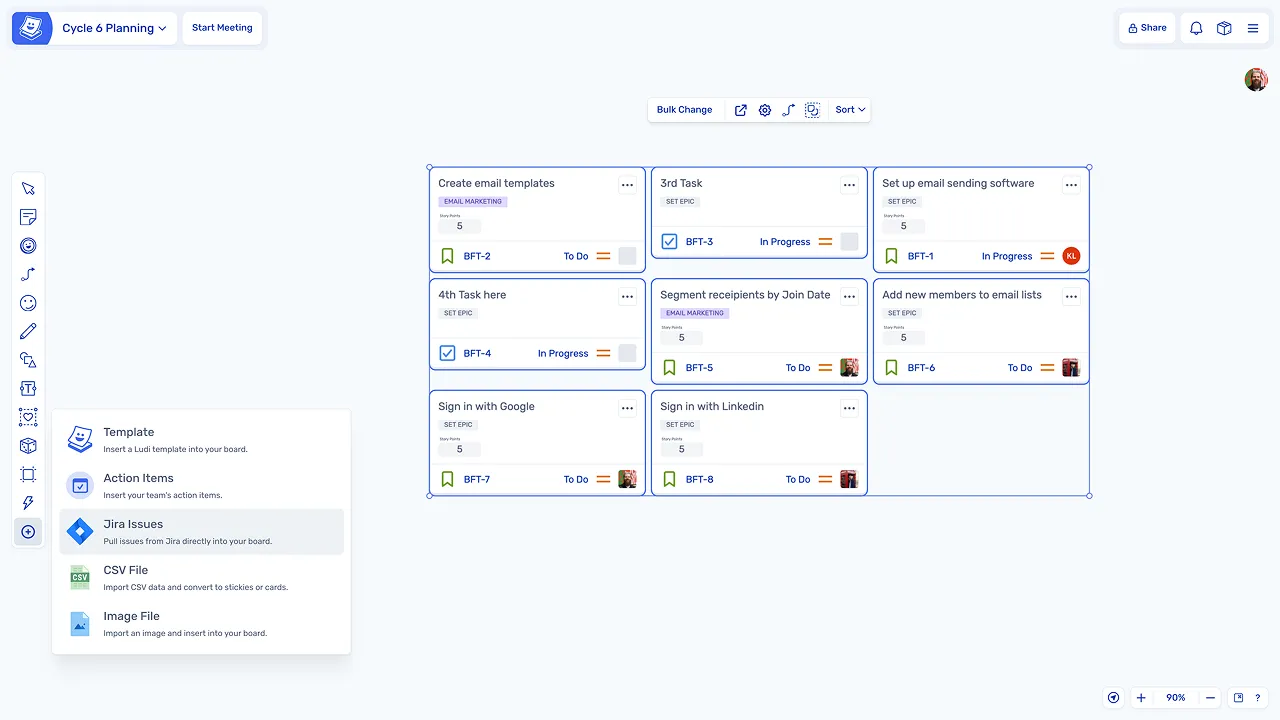
Bring stories onto the board
Jira items can be pulled onto the board or added manually, so the team can review each story in context during the session without switching to a separate tool.
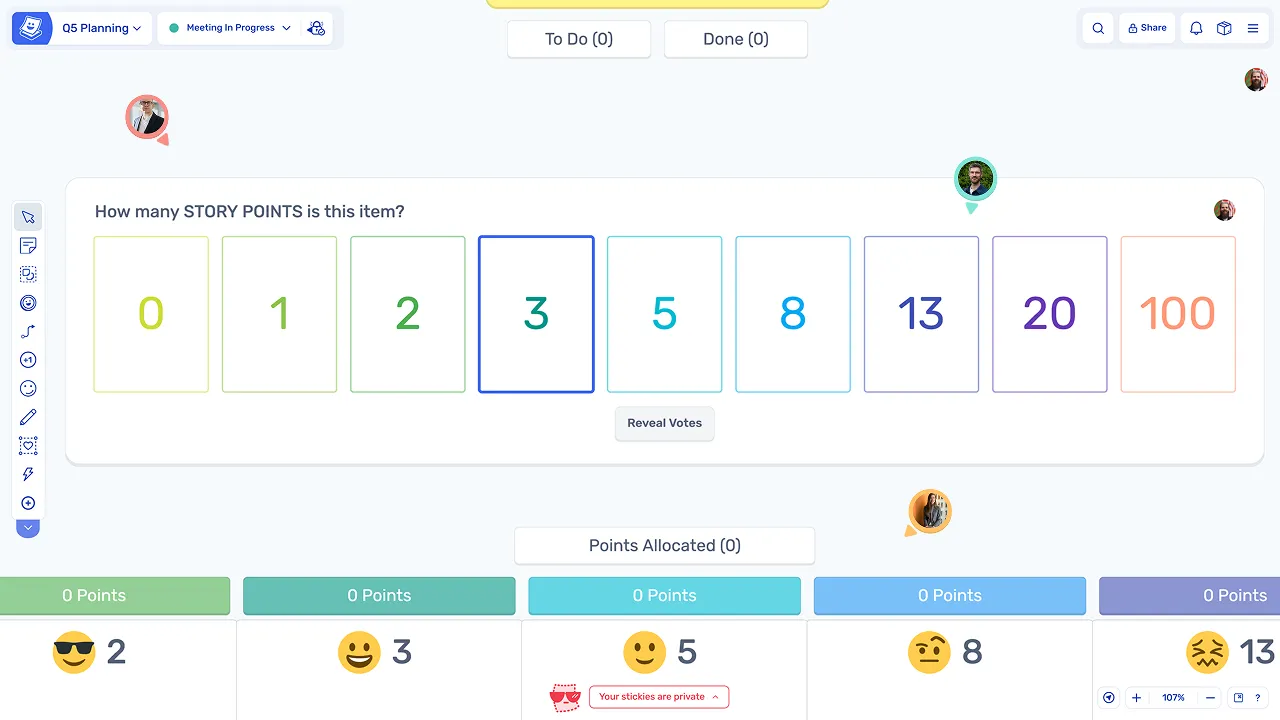
Discuss and estimate privately
For each story, the team discusses briefly, then each participant selects an estimate privately before a simultaneous reveal, preventing anchoring and encouraging independent thinking.
Reach consensus and sync to Jira
Reveal and discuss differences
Estimates are revealed simultaneously. If there is a large spread, the team discusses the story and re-votes until they agree on a shared estimate.
Sync estimates back to Jira
Once the team agrees on an estimate, the final value syncs back to Jira automatically, with no manual updates required after the session.
Keep the session on track
Timers and facilitation controls help the host manage the flow of the session and keep discussions focused, so the team can work through all stories within the time available.
Explore other agile meetings
Planning poker is one of several agile meetings teams run regularly. Explore other agile sessions you can run in Ludi.
Retrospectives
Reflect on what went well, what didn't, and what to improve with structured retros.
Sprint Planning
Plan your next sprint visually with drag-and-drop user stories and a shared board.
Backlog Refinement
Review, prioritise, and clarify backlog items with the whole team in one place.
User Story Estimation
Estimate effort collaboratively with structured estimation activities and planning poker.
Daily Standups
Keep standups focused and async-friendly with a shared status board.
Story Mapping
Map user journeys and plan releases visually with collaborative story mapping boards.