

Made for User Story Estimation
Why Ludi works well for user story estimation
User story estimation works best when the team can discuss the work, clarify assumptions, and then estimate together. Instead of estimating in isolation, Ludi allows teams to review stories, discuss details, and estimate effort in the same workspace, with final estimates synced back to Jira.

Estimation with full story context
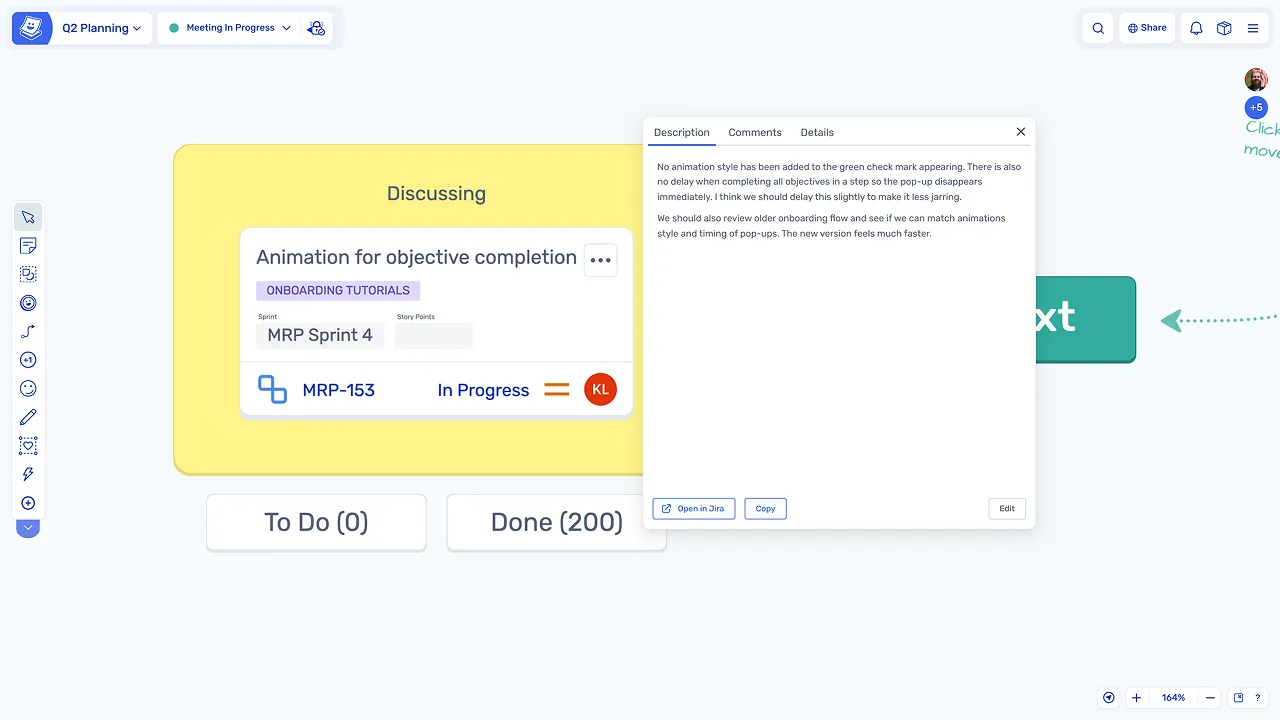
Estimation happens alongside the story details, so the team can discuss requirements, add notes, and clarify assumptions before voting on effort.

Prevent anchoring bias
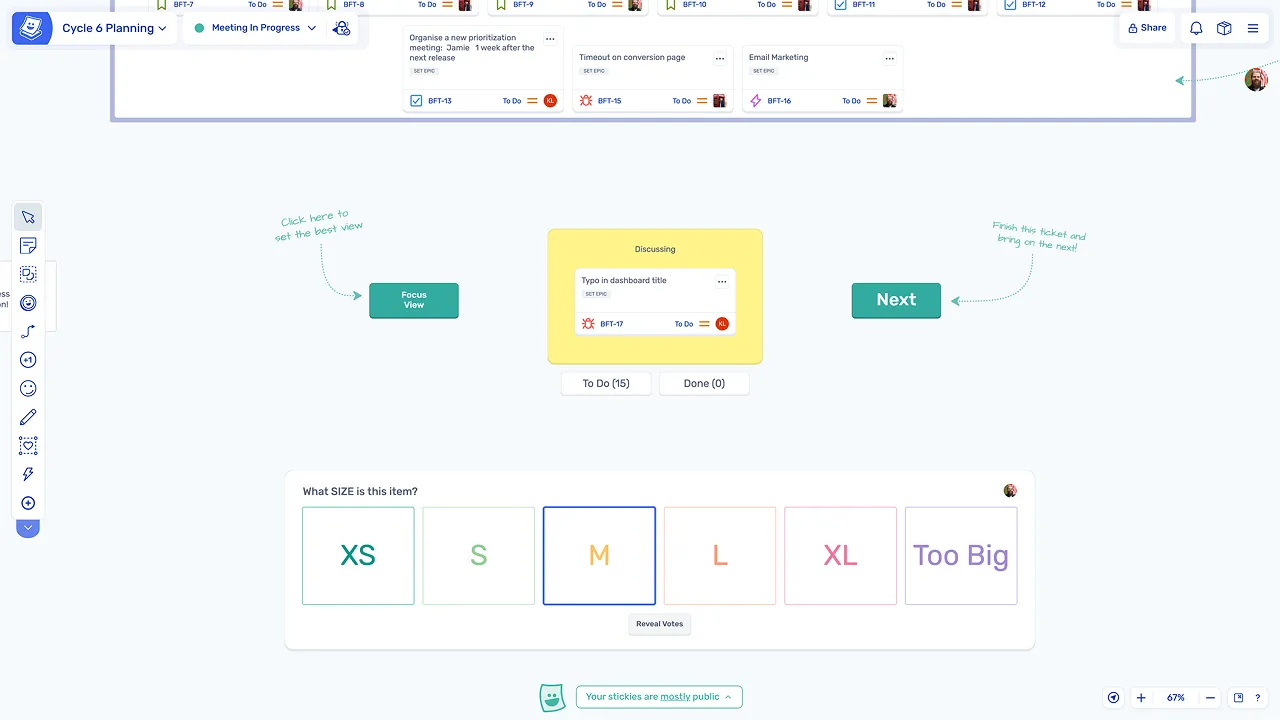
Blind or simultaneous reveal means everyone estimates independently before seeing other votes, helping the team reach a more balanced consensus.

Discussion and estimation in one place
The team can discuss stories, capture notes, and estimate effort on the same board instead of switching between tools.

Estimates sync back to Jira
Final estimates are synced back to Jira automatically, so there is no need to manually update tickets after the session.
What is User Story Estimation?
User story estimation is the session where the team assigns effort estimates to user stories so work can be planned and forecasted. Teams usually estimate using story points, T-shirt sizes, or another agreed scale, with the goal of reaching a shared understanding of how much effort each item will take.
Estimation is often done during backlog refinement or sprint planning. The team briefly discusses each story, estimates effort, and agrees on a final estimate that can be used for sprint capacity planning and prioritisation.
How teams run user story estimation in Ludi
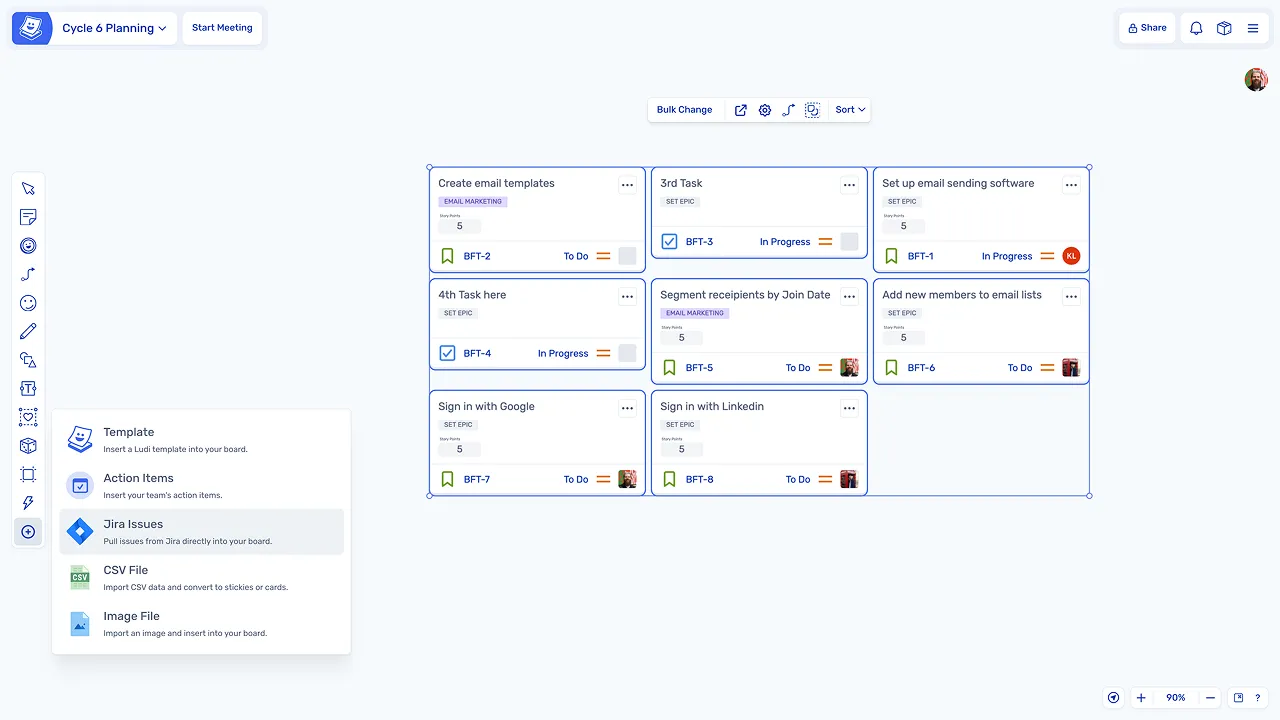
Bring stories onto the board
The team pulls Jira stories onto the board or uses a dedicated estimation template, so everyone can see the stories being estimated.
Discuss each story briefly
Before estimating, the team reviews the story and discusses any assumptions, risks, or unknowns so everyone understands the work.
Estimate simultaneously
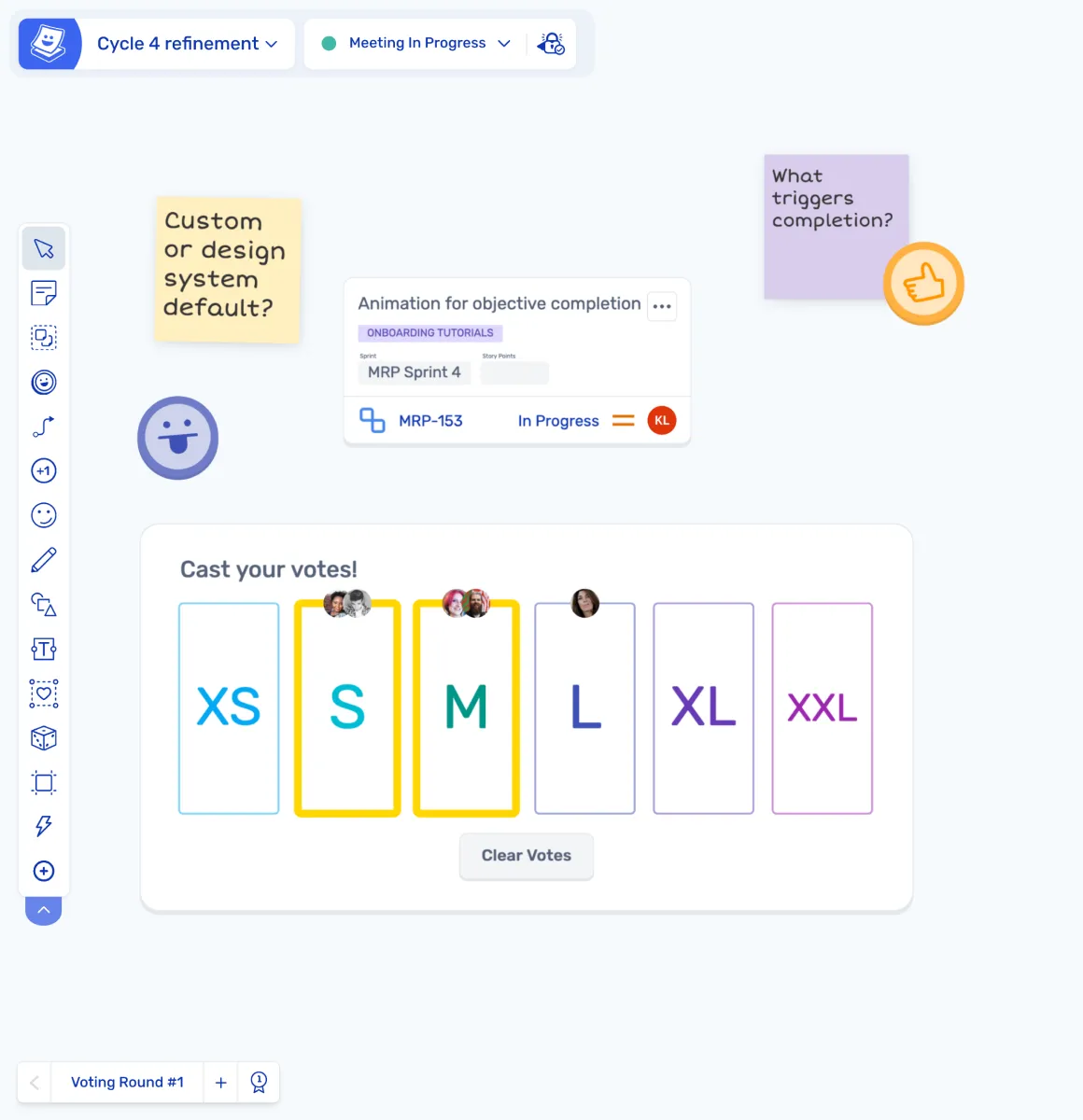
The team estimates each story at the same time using blind or simultaneous reveal, so estimates are made independently.
Reveal, agree, and sync back to Jira
Reveal and discuss differences
Estimates are revealed together. If there is a large difference between estimates, the team discusses the story and then re-estimates.
Sync final estimates back to Jira
Once the team agrees on an estimate, the final value syncs back to Jira automatically.
Keep estimation sessions timeboxed
Timers can be used to keep discussion and estimation for each story focused and on schedule.
Explore other agile meetings
User story estimation is one of several agile meetings teams run regularly. Explore other agile sessions you can run in Ludi.
Retrospectives
Reflect on what went well, what didn't, and what to improve with structured retros.
Sprint Planning
Plan your next sprint visually with drag-and-drop user stories and a shared board.
Backlog Refinement
Review, prioritise, and clarify backlog items with the whole team in one place.
Planning Poker
Run async-friendly poker estimation sessions to align the team on story complexity.
Daily Standups
Keep standups focused and async-friendly with a shared status board.
Story Mapping
Map user journeys and plan releases visually with collaborative story mapping boards.