

Made for Agile
Why Ludi is the best option for your Agile meetings
Agile meetings follow a structured process. The team contributes ideas, discusses priorities, makes decisions, and leaves with clear actions. Ludi is designed to support this exact flow, giving teams the structure, collaboration tools, and outcome tracking needed to run effective agile ceremonies from start to finish.

Structured meetings, ready to run
Ludi provides templates and guided activities designed specifically for agile ceremonies, so teams can follow a clear process without setting everything up from scratch.

Faster setup for every ceremony
Boards are ready to use with the right structure already in place, so teams can focus on the meeting instead of preparing the workspace.

Better participation from the whole team
Private writing, voting, and collaborative activities help everyone contribute, not just the loudest voices in the room.

Clear outcomes, not just discussion
Actions and decisions are captured on the board and tracked, so meetings lead to visible follow-up, not forgotten notes.

One tool for all agile ceremonies
Retrospectives, sprint planning, estimation, story mapping, and other agile meetings can all be run in the same workspace.

Connected to your delivery workflow
Two-way Jira integration keeps planning and execution connected, without copying information between tools.
What are Agile Meetings?
Agile meetings are the recurring sessions that help software teams plan work, align on priorities, and improve how they work together. These include retrospectives, sprint planning, estimation, backlog refinement, standups, story mapping, and PI planning. They are typically structured, timeboxed sessions where the team contributes ideas, discusses priorities, makes decisions, and agrees on next steps.
Most agile meetings involve the full team and are often run remotely or in hybrid settings. Because these sessions follow a clear structure and require participation from everyone, teams need a workspace where they can collaborate, discuss, prioritise, and capture outcomes in one place.
How teams run agile meetings in Ludi
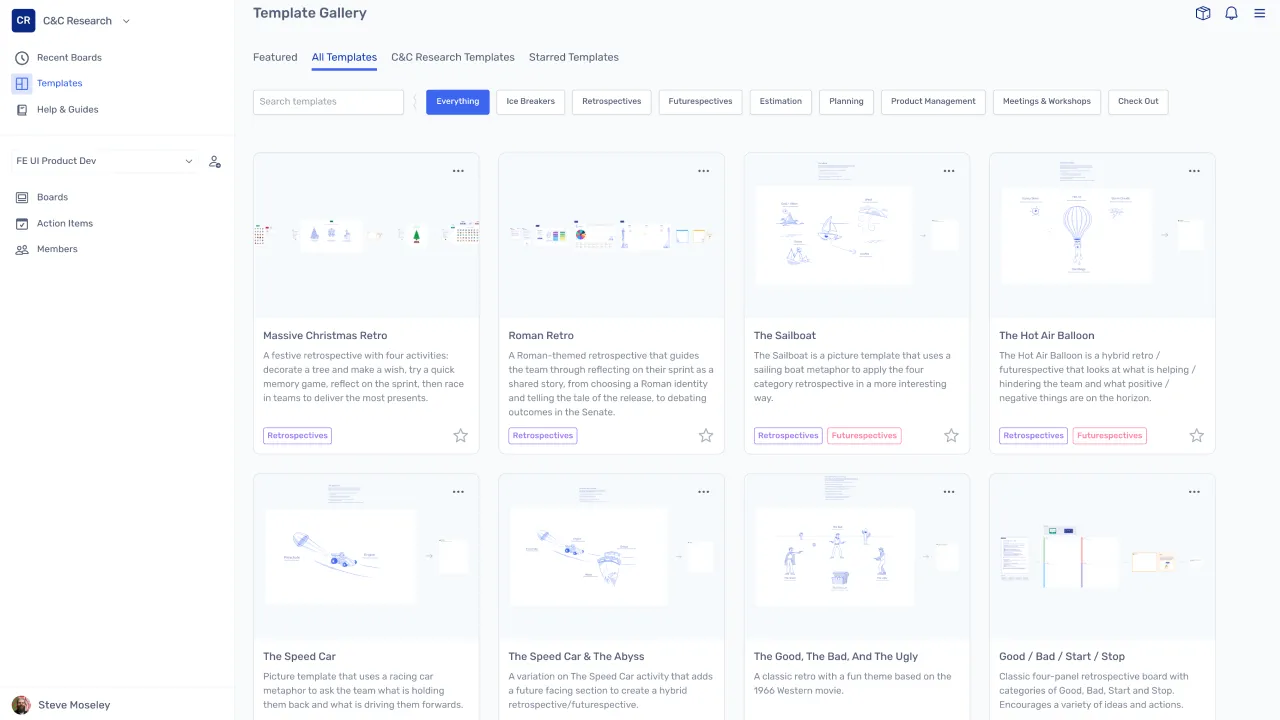
Start with the right template
Choose a template designed for the specific ceremony, whether it is a retrospective, sprint planning session, estimation, backlog refinement, or story mapping. Each board is already structured for the session, so the team can start contributing straight away.
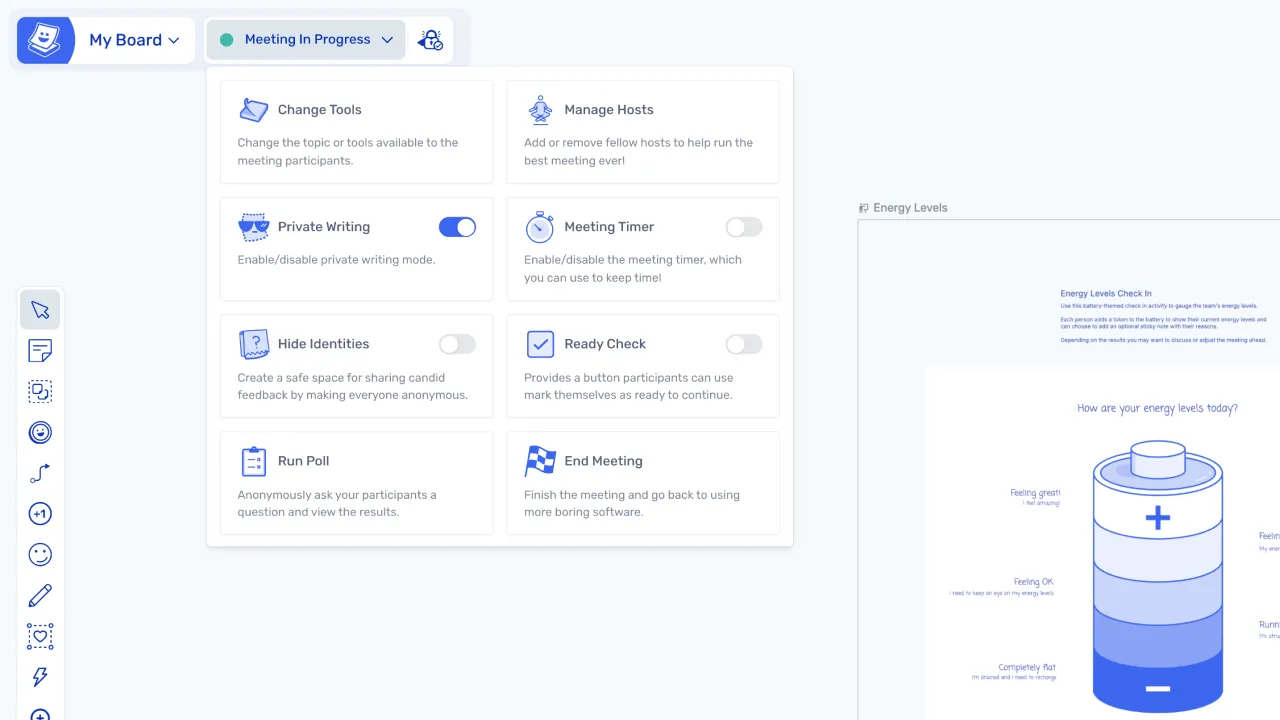
Guide the team through each step
Use activity frames and facilitation controls to move the team through each phase of the meeting. The facilitator can guide the group through writing, discussion, grouping, voting, and defining actions in a clear step by step flow.
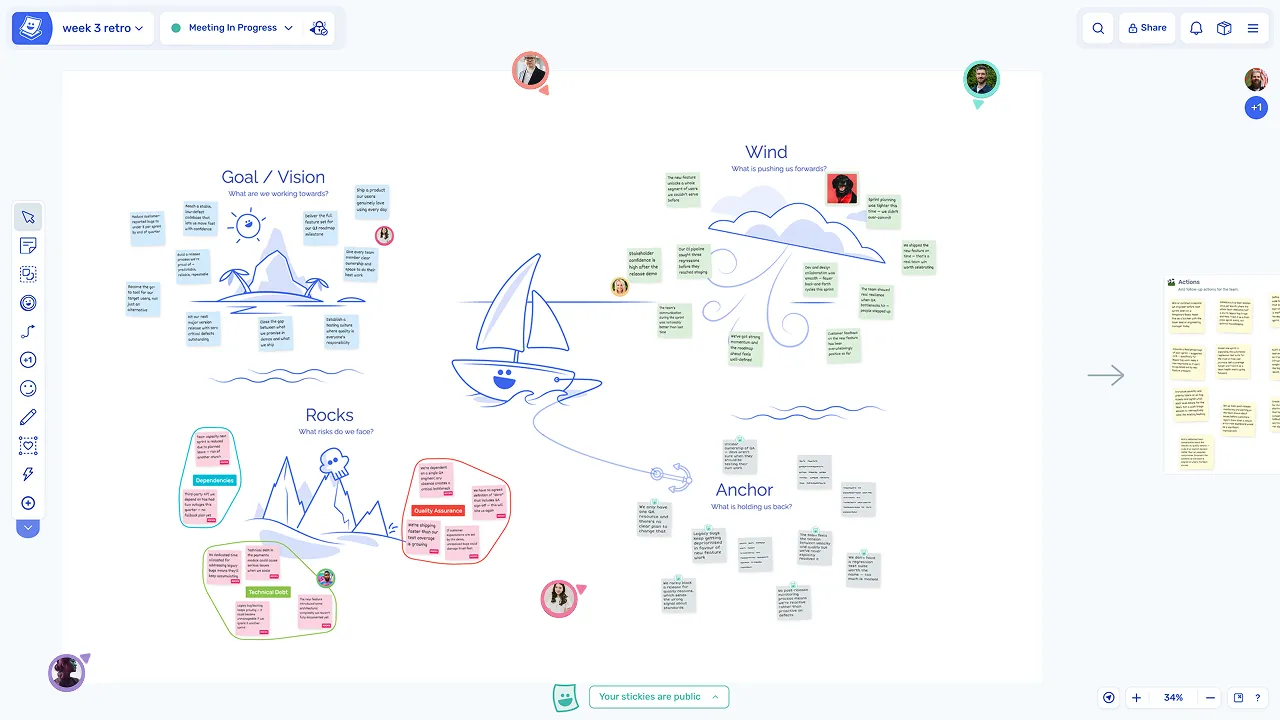
Collaborate and contribute together
Participants add sticky notes, share ideas, group related topics, and vote on priorities. Private writing allows everyone to contribute independently before ideas are shared with the group.
Keep meetings timeboxed, focused, and outcome-driven
Keep meetings timeboxed and focused
Timers help the facilitator keep each part of the meeting on track, so discussions stay focused and the session finishes on time.
Capture actions and decisions
Actions and decisions are recorded on the board and tracked with assignees and due dates, so outcomes from retrospectives and planning sessions are not lost.
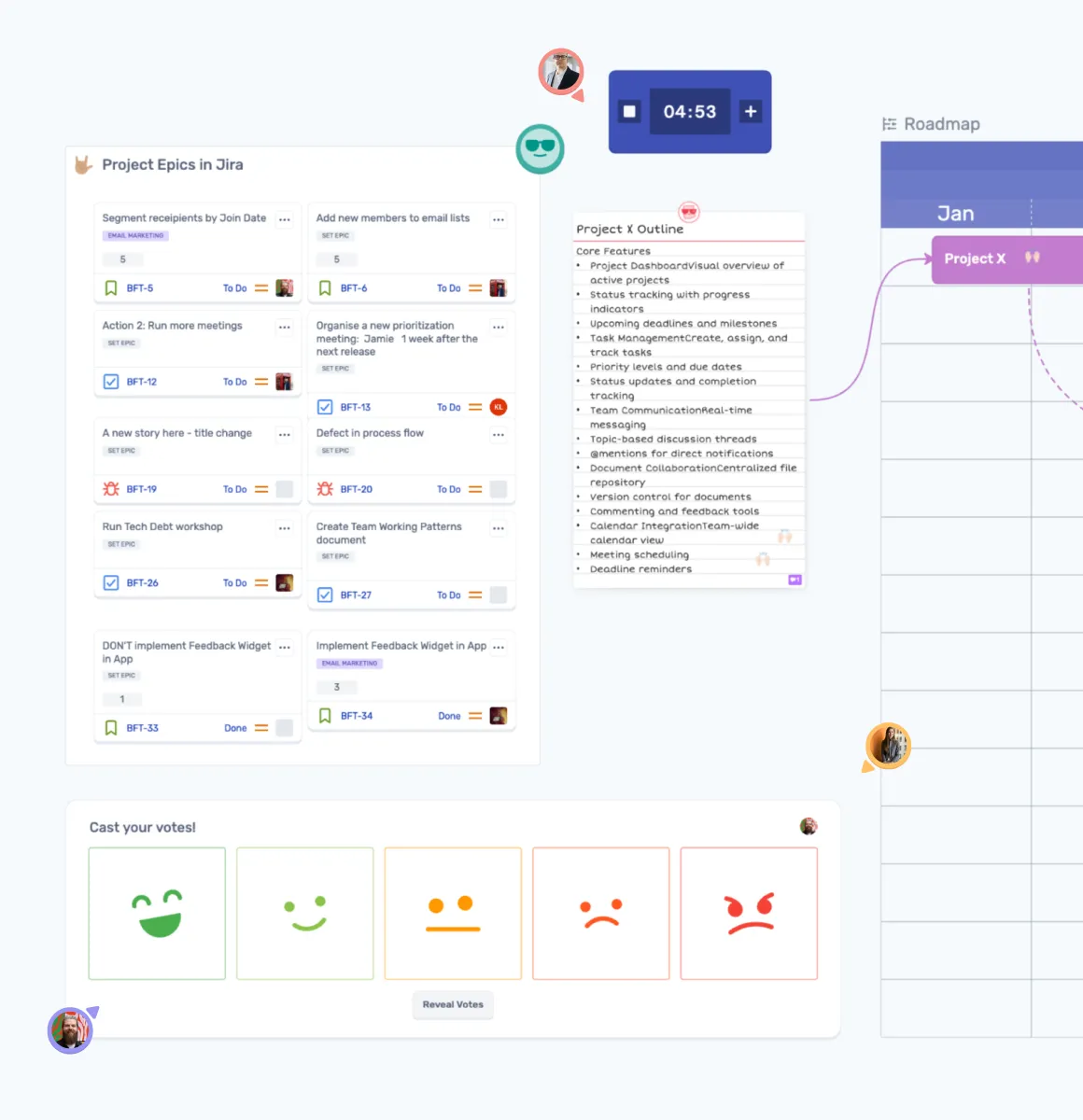
Connect planning with delivery
With Jira integration, teams can bring work items into planning and estimation sessions and keep decisions connected to the delivery workflow without copying information between tools.
Agile meetings you can run in Ludi
Explore specific agile meetings and how to run each one in Ludi.
Retrospectives
Reflect on what went well, what didn't, and what to improve with structured retros.
Sprint Planning
Plan your next sprint visually with drag-and-drop user stories and a shared board.
Backlog Refinement
Review, prioritise, and clarify backlog items with the whole team in one place.
User Story Estimation
Estimate effort collaboratively with structured estimation activities and planning poker.
Planning Poker
Run async-friendly poker estimation sessions to align the team on story complexity.
Daily Standups
Keep standups focused and async-friendly with a shared status board.
Story Mapping
Map user journeys and plan releases visually with collaborative story mapping boards.